
Feeling Anxious? Here’s How Mindfulness Can Help.

Mindfulness offers a different way to relate to anxious thoughts and sensations, rather than fighting them.
Hi, I'm Stevie, and I'm a somatic therapist and owner of Embodied Healing, a practice for trauma healing in Kansas City. I get asked all of the time from clients how they can feel less anxious in order to feel like they are actually living their life and reaching the goals they have set for themselves.
I had the pleasure of learning from Dr. Liz Roemer, professor of psychology at the University of Massachusetts Boston. She and her colleague have researched how to help people with anxiety overcome their challenges using mindfulness and acceptance-based techniques. Let’s chat about what I learned from her and how to be with your anxiety instead of distracting yourself from or fearing it.
What Is Anxiety?
The American Psychological Association defines anxiety as "an emotion characterized by apprehension and somatic symptoms of tension in which an individual anticipates impending danger, catastrophe, or misfortune."
Some classic symptoms of anxiety include:
Excessive worry without being able to stop easily
Restlessness
Difficulty concentrating
Increased heart rate
Sense of hypervigilance
Avoidance of activities due to fear
Tension in the body
This is certainly not an exhaustive list, but it is important to note that anxiety is both somatic as well as mental. Everybody has fleeting moments of anxiety from time to time, which is normal and desired (in order to keep us safe). However, when anxiety is constant or out of proportion in relation to the stimulus, it becomes a problem.
Dr. Roemer and her colleague, Dr. Orsillo, propose that anxiety becomes an issue because it impacts us in three ways:
We develop a problematic relationship with our internal experiences of anxiety. Our focus is narrowed to the anxiety itself.
We avoid feeling the anxiety, doing anything to distract (even if it turns out to be worse for us, like shopping, eating, or drinking).
We withdraw from our life. We stop doing things that bring us joy and meaning.
Given this, they also propose there are three ways to work with the anxiety instead of having a power struggle with it.
Goal #1: Change your relationship with your internal experiences.
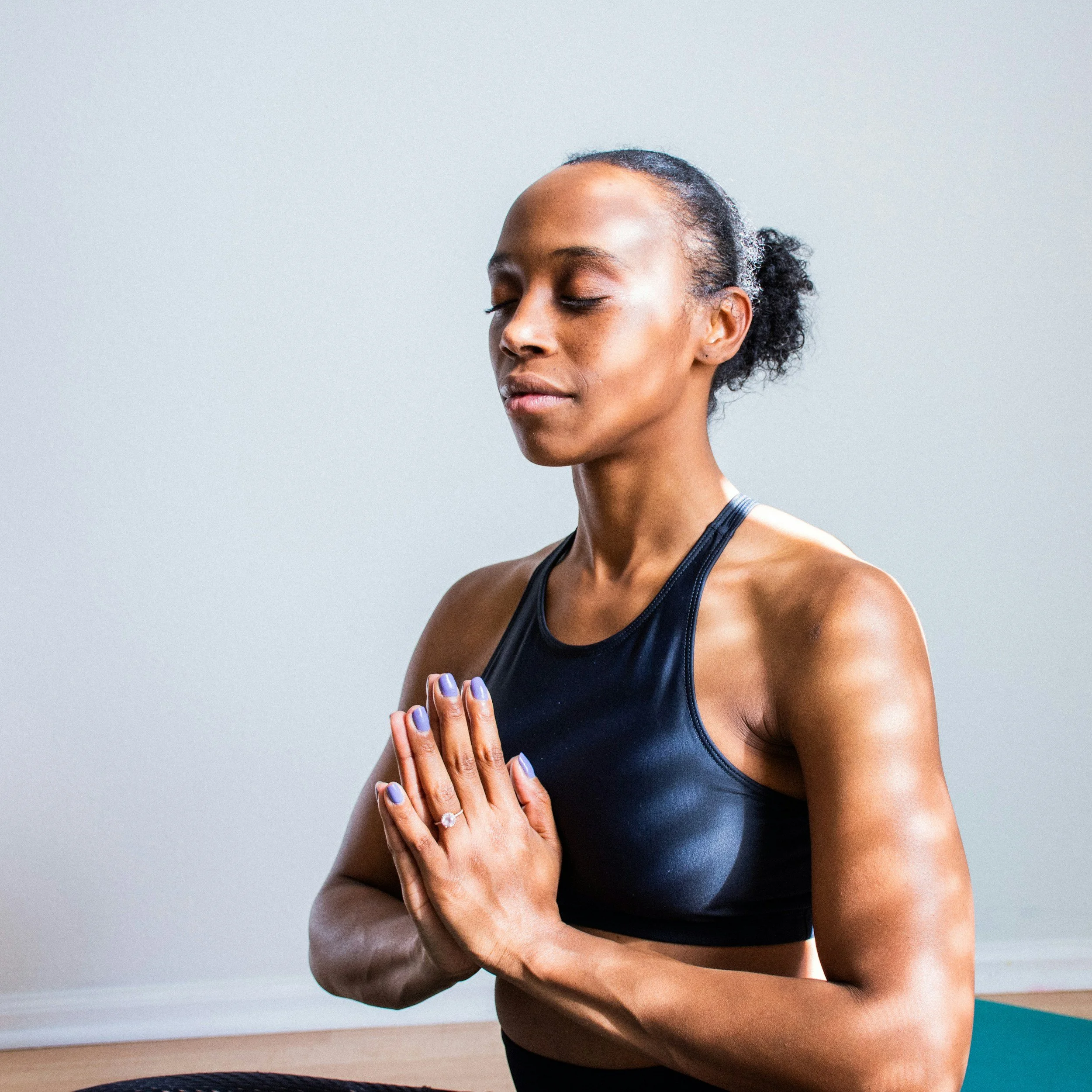
Mindfulness practices, such as meditation, can be helpful in developing the skill of noticing anxiety within you.
There are many ways to go about this, but you must first identify that you are having an anxious internal experience in the first place. This is where journaling and mindfulness practices, such as meditation, can be helpful in developing this "noticing" muscle.
Ask yourself questions like "what am I feeling" and "what is this emotion trying to teach me in this moment?" Sometimes our feelings can be really confusing because they are outsized and don't match the situation we are in. This is okay, and this is normal for somebody with anxiety. Instead of getting in your head or judging yourself about this, try:
Developing a sense of curiosity
Notice the transience of having a feeling or anxious thought
Be aware that you aren't your feelings or thoughts; use language like "this feeling is arising in me."
Goal #2: Be willing to have the challenging experience.
This is where we turn towards the experience instead of away. By distracting and repressing our feelings, we unwittingly create a power struggle with it and it winds up persisting. Not to mention, it wreaks havoc on your nervous system, putting us into fight, flight, or freeze. We like to think we can escape emotions, but we can't.
We have to acknowledge that we only have so much control over things, and the less energy we expend trying to control the more we have for ourselves and our mindfulness practices. By practicing radical acceptance, we open ourselves to all experiences, even the uncomfortable ones. Here are some tips for radical acceptance:
Remind yourself that the experience is indeed happening and that it cannot be changed
Imagine what you would be doing if you had accepted that it can't be changed and act accordingly
Feel the grief, sadness, or anger that arises because of this
Practice self-compassion (Learn how to practice self-compassion here.)
Goal #3: Engage with your life again in accordance with your values.
Having anxiety means that we miss out a lot of the time. We don't go to the potluck because we are afraid of where we will sit or who we will talk to; we don't go to the tennis club because we are afraid we will look stupid trying something new. Sometimes, if anxiety gets bad enough, we avoid doing normal tasks, like going to the grocery store or to the park with our kids because we are afraid of the anxiety.
This impacts the ways in which we are able to live out our values. If being a present parent is a value, or being able to create social change by going to that rally is a value of yours, anxiety can create a lot of friction for people morally. Try journaling about some of your values using these questions in order to discover more about yourself. Then, ask yourself when you are in a moment of anxiety but want to make a behavioral choice, "Am I living in accordance with my values right now?"
Note: it is super important not to use this last part as a way to shame yourself which can have the opposite intended effect and prohibit you from doing the work of being with anxiety.
Don't do it alone. Explore Somatic Therapy In Kansas City
Therapy for anxiety is always the right move. Whether it be Cognitive Behavioral Therapy, Somatic Experiencing, or any mindfulness intervention, therapy is an essential tool for working through your anxiety.
Don't hesitate to reach out to one of our fabulous therapists in Kansas City today! Lauren and Kathryn are currently taking new clients.
Frequently Asked Questions About Mindfulness and Anxiety
-
Anxiety is an emotion marked by apprehension and physical tension when we anticipate danger or misfortune. Occasional anxiety is normal and even protective, but it becomes a problem when it's constant or out of proportion to the situation.
-
Mindfulness helps you notice and name anxious thoughts and sensations instead of avoiding or fighting them. Practices like journaling and meditation build the "noticing" muscle so you can meet anxiety with curiosity instead of panic.
-
It means turning toward the experience instead of distracting from or repressing it. Practicing radical acceptance, acknowledging the feeling is happening and can't be changed in the moment, reduces the power struggle that often makes anxiety worse.
-
Anxiety often leads us to avoid things that matter to us, skipping social events, new activities, even everyday tasks. Journaling about your values and checking in with yourself during anxious moments can help you make choices that align with who you want to be.
-
Yes. These approaches reduce the internal struggle that keeps anxiety activated, which helps regulate your nervous system over time.
-
Absolutely. Cognitive Behavioral Therapy, Somatic Experiencing, and other mindfulness-based interventions are all effective tools for working through anxiety, and our clinicians can help you get started.

Stevie Olson-Spiegel is a Licensed Therapist and Somatic Experiencing Practitioner located in Kansas City. She uses Somatic Experiencing as her main body-based trauma healing modality, as well as EMDR. As an Intuitive Eating Counselor, she uses these principles to help her clients challenge their relationship with their cultural misconceptions about their body and food.




Dr. Liz Roemer's mindfulness and acceptance-based approach to working with anxiety instead of against it, from a Kansas City therapist who specializes in anxiety treatment.