
What Is Self-Compassion and Why Does It Matter?

A somatic therapist’s take on why softening towards yourself is a game changer.
Before we get started, I must give credit where credit is due. The majority of what we will talk about today comes from the beautiful brains of Dr. Neff and Dr. Germer who co-created Mindful Self-Compassion. I have had the pleasure and privilege of learning directly from Dr. Germer all about this intervention that is radically transforming how people see themselves and how they move in the world.
What is self-compassion?
Self-compassion is your posture towards yourself when you suffer. It is treating yourself like you would a dear friend who is struggling, acknowledging the pain and being with it instead of blaming or dismissing it.
Many of my clients roll their eyes when I say the words self-compassion, and I believe it gets a bad rap because of the connotation that it means being super mushy with yourself or infantilizing the self. That is not at all what this is! I like to think of self-compassion as softening towards the self; being more gentle and giving yourself unconditional positive regard.
What are the types of mindful self-compassion?

Gentle self compassion looks like soothing and nurturing the self. Fierce self compassion is powerful and assertive.
Before we even get into two expressions of self-compassion, it is important to note that the more it becomes some sort of self-improvement “project,” the more elusive and counterproductive it becomes. When we allow ourselves to deeply feel our pain and stay with it, see all of the sides of it, self-compassion will spontaneously arise. There is no point in doing a meditation, for example, on self-compassion if you are so far disconnected from it. It simply won’t resonate. Don’t force it. Let self compassion gently come to you.
Dr. Germer and Dr. Neff separate self-compassion into two parts: gentle and fierce. The gentle side is what most people probably think of when they think of self-compassion. This looks like soothing, nurturing, and loving the self.
Fierce compassion, oppositely, is like the mother bear protecting her children. It is powerful, assertive, and dominating. There is no right way to practice self-compassion, but it is important that your tone (either gentle or fierce) matches the situation. What I mean by that is that at times, you might have to be more forceful with yourself rather than passive. Again, if somebody was completely chewing out your friend in front of you, would you be quiet, or would you loudly speak up for them? This is how we want to practice attunement with our own inner critic and our own needs.
Why can self-compassion be so challenging?
Most of us have harmful internal narratives that arise which is why we need self-compassion in the first place. Also, if we have no solid early experiences with receiving nurture or softness from a caregiver, then there will more than likely be some blowback from your own self against being kinder.
Dr. Germer calls this phenomenon “backdraft.” Backdraft is this unintended consequence of trying to be more kind to yourself. Old wounds, traumas, and narratives are likely to come up in opposition to the new way you are trying to relate to yourself.
Instead of being surprised by it and stopping the practice altogether, expect that it will happen. Understand that suffering is a part of life and it is likely to come up in your practice of self-compassion. The real juicy work is sitting with it until it too softens and you gain new insight about yourself. It is beautiful, challenging work!
How do I practice self-compassion?
Challenge inner narratives.
Notice when your automatic thoughts are really harsh, and step in like a competent protector would. Say something back to it; don’t just let that thought continue to have all of the power.
Practice metta meditation.
There are many positive benefits of practicing metta meditation, including cultivating loving kindness towards the self. There are different ways to practice this kind of meditation, but make sure no matter what you include positive words for yourself! Here are some of my favorite mantras for metta meditation:
“May I be safe and healthy.”
“May I receive love and care easily from others.”
“May I find inner peace.”
“May I be happy.”
Pro tip: If saying “I” feels strange to you, try saying “you” instead, as if you were a third party.
Try doing a Self-Compassion Break.
Self-Compassion Breaks are a really accessible way to practice inner kindness throughout your day, and also a great way to offset stress. This has three parts:
Acknowledge the suffering.
Remind yourself that everybody suffers.
Find a way to be kind to yourself.
Here is an example:
“I am feeling really anxious right now.
A lot of people will feel anxious in their lifetimes, it is a normal part of human experience.
I know that I will be okay no matter what happens, and I am worthy of slowing down at this moment so that I don’t feel as overwhelmed in my body.”
The efficacy of self-compassion:
This intervention has been studied numerous times and has been able to link so many positive benefits of practicing mindful self-compassion. Some of these benefits include:
Ability to draw better boundaries
Improved self-image (including body image)
Decreased stress levels
Greater heart rate variability
Less mental rumination
Attentiveness to physical needs (including nutritious foods and movement)
Feel more connected with others
Seems worth it, right?
Can anybody help me with self-compassion?
Absolutely! This is not meant to be done alone. While sure, it is an inside job, it can be a tough one to figure out on your own. If you are struggling with being kind to yourself and would like some assistance, Embodied Healing Collective in Kansas City is ready to help! Send us an email or call us to set up a consultation to see how we can best support you.
Peace and ease, friends.
Frequently Asked Questions About Self-Compassion
-
Self-compassion is your posture towards yourself when you suffer. It is treating yourself like you would a dear friend who is struggling, acknowledging the pain and being with it instead of blaming or dismissing it.
-
Gentle self-compassion looks like soothing, nurturing, and loving the self. Fierce self-compassion is like the mother bear protecting her children: powerful, assertive, and protective. There is no right way to practice, but your tone should match the situation.
-
Most of us have harsh internal narratives, and without early experiences of nurture from a caregiver, being kinder to yourself can bring up resistance. Dr. Germer calls this “backdraft,” when old wounds, traumas, and narratives come up in opposition to the new way you are trying to relate to yourself.
-
A self-compassion break is a quick practice with three parts: acknowledge the suffering, remind yourself that everybody suffers, and find a way to be kind to yourself.
-
Research links mindful self-compassion to better boundaries, improved self-image (including body image), decreased stress, greater heart rate variability, less rumination, more attentiveness to physical needs, and feeling more connected with others.
-
Yes. Self-compassion is an inside job, but it can be tough to figure out on your own. Embodied Healing Collective in Kansas City offers consultations to help you build a kinder relationship with yourself.

Stevie Olson-Spiegel is a Licensed Therapist and Somatic Experiencing Practitioner located in Kansas City. She uses Somatic Experiencing as her main body-based trauma healing modality, as well as EMDR. As an Intuitive Eating Counselor, she uses these principles to help her clients challenge their relationship with their cultural misconceptions about their body and food.

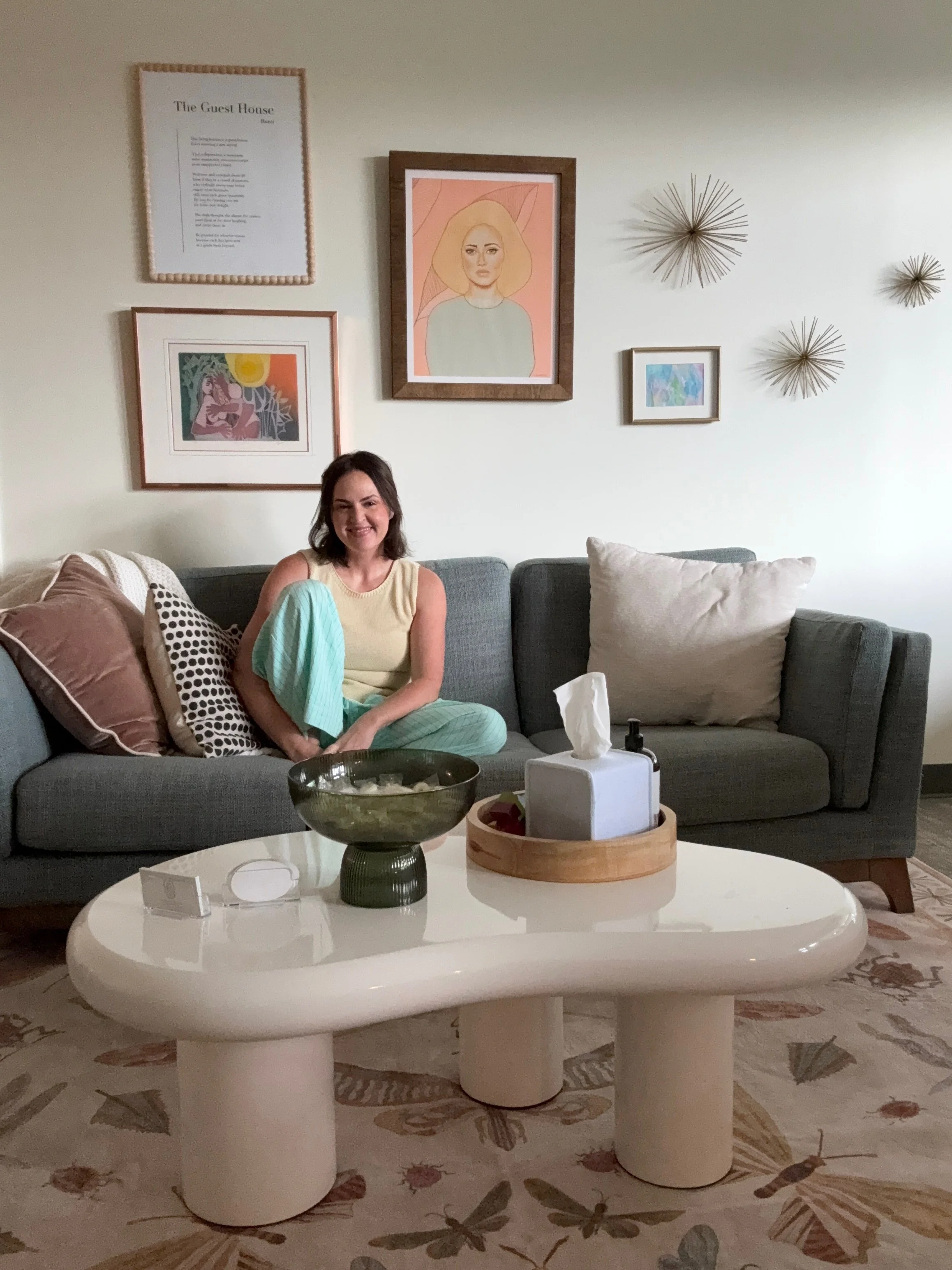


What self-compassion really is, gentle vs. fierce self-compassion, why it can feel so hard, and 3 simple practices from a Kansas City therapist.