
The Importance of Taking In the Good for Your Mental Health

By taking in the good, we can hardwire ourselves for resiliency and enjoyment of positive experiences.
I recently got to learn from Dr. Rick Hanson, who is a fellow at the Greater Good Science Center at UC Berkeley and has written many books on mental health topics, including mindfulness, Buddhist practices that can benefit us, and about how the brain is hardwired.
Dr. Hanson has done some incredible work in the field of mindfulness and the benefits of installing positive experiences in a way that actually changes how your mind works. By taking in the good, we can hardwire ourselves for resiliency and enjoyment of positive experiences.
Mindful Cultivation of Inner Resources
Wow, that is a mouthful. What does it mean to mindfully cultivate an inner resource?
First, let’s define an inner resource. This is the traits that you have or desire to have, such as, but not limited to:
Self-esteem
Resilience
Gratitude
Self-compassion
Patience
Mindful cultivation is something introduced to me by Dr. Hanson. He suggests that any time we find ourselves having a moment in which we are already experiencing one of these inner resources, that we take that in mindfully, really being with the experience and noticing how it impacts us.
Mindful cultivation allows us to do something really empowering: it allows us to be an active agent in the brain change process. Let’s chat about the particulars of this!
Why Does It Feel Like I’m Wired to Worry or Always Think About the Negative?
Because, well, you are. I know it is an extremely pessimistic thing to say, but the hope is in the fact that all our brains are extremely flexible and adapt to new information thanks to something called neuroplasticity (a bit on that later).
Our amygdala is constantly on the lookout for threat, sending us into fight, flight, or freeze at the drop of a hat. It is the part that takes over when you put your hand too close to the stove and makes you move without really thinking about it. The midbrain is in charge of all of our feelings; it allows us to have emotional reactions to things that harm us in any way. These two places are highly reactionary and are wired for self-protection.
In short, our brains are really good at learning from bad experiences and not so great at learning from good experiences, but this can be changed!
Safety, Satisfaction, and Connection
We all need safety, satisfaction, and connection to feel well in this life. If we are only learning from negative experiences, then we are likely to avoid the unknown, feel intense craving and desire for things without much satisfaction, and have a difficult time feeling attached to others.
Taking in the good allows us to feel safe, satisfied, and connected. We feel less reactive and more present. Taking in the good allows our nervous system to really understand that we are good, that we have what we need, that we are well.
How Do I Find More Contentment in My Life?
We do this by having intentional experiences with the positive things that are already happening in our lives. Dr. Hanson proposes the HEAL method:
H: Have a positive experience
E: Truly experience it
A: Absorb the experience
L: Link this experience to other experiences in your life
Most of these seem really self-explanatory, but I think a lot of people get tripped up on what it means to actually absorb an experience. Next time you find yourself in a situation that you are especially enjoying, try some of these:
Take a few deep breaths while noticing the moment
Figure out where you feel it in your body
Notice what emotion it draws in you
Talk about it in the moment
Take in the sensory details of the moment
This helps us to not just have an experience and therefore experience a nervous system state that is advantageous or pleasurable for us, but to create lasting change in the brain that wires us to find the good. What we pay attention to grows. What we acknowledge, we see more and more of.

If you’re having trouble noticing positive experiences, create some in Kansas City.
Places In Kansas City To Make Good Memories
Having trouble noticing positive experiences? Create some! Here are some great places in Kansas City to make good memories that can rewire your brain:
Union Station: There is so much to do and see, from Science City to the delicious restaurants to the newest exhibits. It is especially beautiful during the holiday season.
The Nelson-Atkins Museum: It’s hard not to have a positive experience looking at all of the creativity the museum surrounds you with. For an extra mood boost, walk around the gardens outside and marvel at the sculptures.
Farmer’s Markets: Now that the weather is cooling off, enjoy a hot cup of coffee and buy yourself some flowers. This is a great place to get the senses involved.
The Blue Room: Switch things up and visit the Blue Room for some great Kansas City jazz.
Faulkner’s Ranch: Now that it’s fall, get outside with the family and take in the kids’ smiles as you pick some pumpkins.
Creating and experiencing good things doesn’t have to take up a lot of time or money. Next time you sit down for your morning coffee, practice the HEAL method and notice what happens!
Can anybody help me with taking in the good?
Absolutely! This is not meant to be done alone. While sure, it is an inside job, it can be a tough one to figure out on your own. If you are struggling with noticing and taking in the good and would like some assistance, Embodied Healing Collective in Kansas City is ready to help! Send us an email or call us to set up a consultation to see how we can best support you.
Peace and ease, friends.
Frequently Asked Questions About Taking In the Good
-
“Taking in the good” is a practice developed by psychologist Dr. Rick Hanson that involves intentionally pausing to notice, feel, and absorb positive experiences so they create lasting change in the brain, rather than letting them pass by unnoticed.
-
Our amygdala and midbrain are wired for self-protection, constantly scanning for threats and generating strong emotional reactions to anything harmful. This negativity bias made sense for survival, but thanks to neuroplasticity, we can train our brains to take in the good just as readily.
-
The HEAL method, developed by Dr. Rick Hanson, stands for Have a positive experience, Experience it fully, Absorb it, and Link it to other experiences in your life. It’s a simple framework for turning everyday positive moments into lasting inner resources.
-
Try taking a few deep breaths while noticing the moment, figuring out where you feel it in your body, naming the emotion it draws out, talking about it out loud, and taking in the sensory details. These small steps help the experience sink in rather than pass by.
-
Yes. Practicing safety, satisfaction, and connection through taking in the good helps the nervous system feel calmer and more present, which can reduce reactivity and support a greater sense of well-being over time.
-
Absolutely. A therapist, like those at Embodied Healing Collective in Kansas City, can help you build the skill of noticing and absorbing positive experiences and guide you through practices like the HEAL method.

Stevie Olson-Spiegel is a Licensed Therapist and Somatic Experiencing Practitioner located in Kansas City. She uses Somatic Experiencing as her main body-based trauma healing modality, as well as EMDR. As an Intuitive Eating Counselor, she uses these principles to help her clients challenge their relationship with their cultural misconceptions about their body and food.


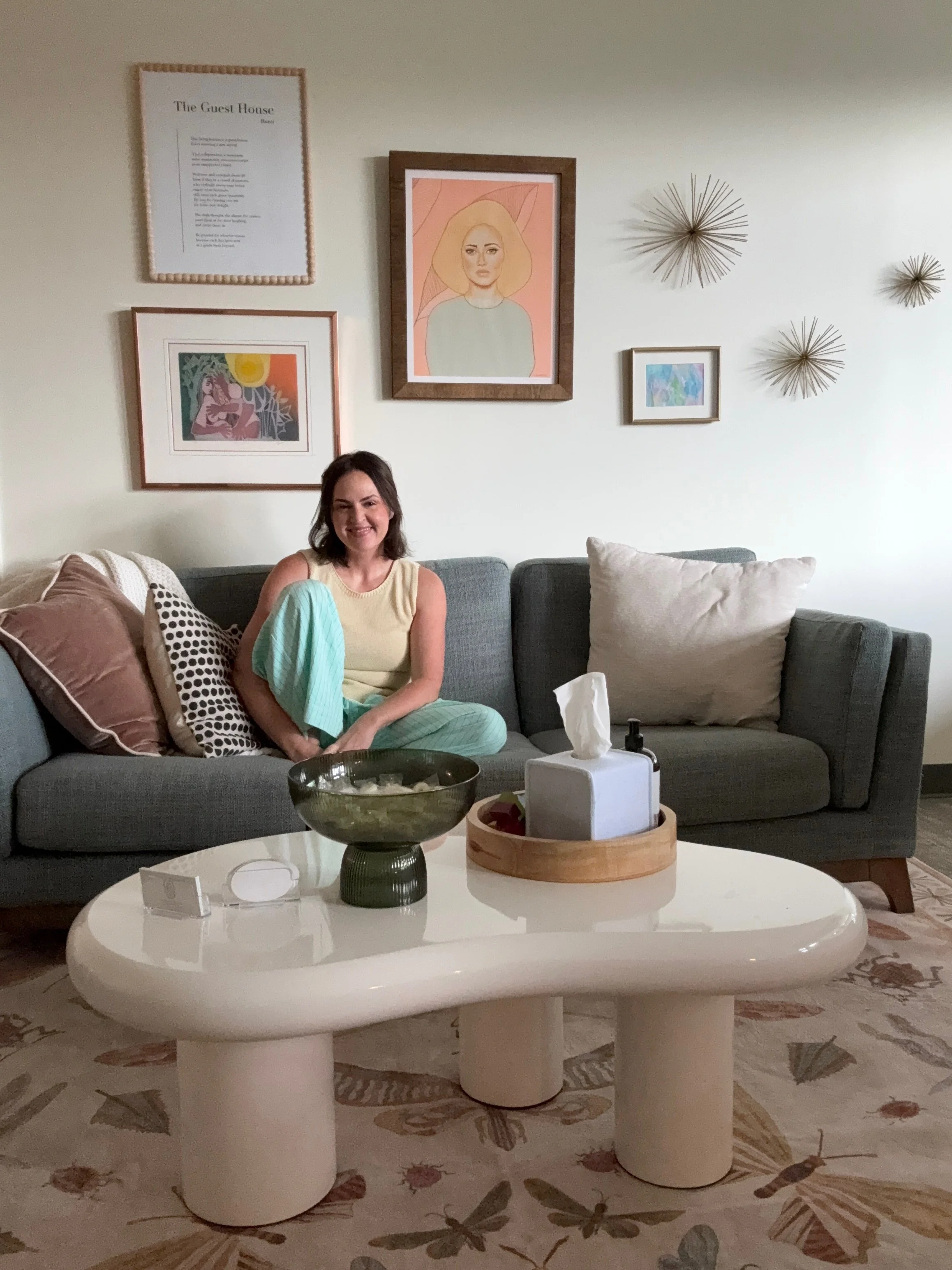

Dr. Rick Hanson’s HEAL method, why our brains are wired for negativity, and simple ways to take in the good for lasting resilience, from a Kansas City therapist.