
Attachment Styles and Trauma: How Early Experiences Shape Your Relationships

Understanding the connection between attachment theory and trauma is essential for anyone seeking to improve their mental health and build secure, healthy relationships.
The Connection Between Attachment Styles and Trauma
Attachment styles are something I often talk to my clients about as they impact so much of my client's lives. Our relationships early on fundamentally impact our ability to attach to others and the trajectory of that relationship. Understanding the connection between attachment theory and trauma is essential for anyone seeking to improve their mental health and build secure, healthy relationships.
John Bowlby and Mary Ainsworth worked closely together in the 1950s and developed attachment theory. They theorized that early relationships with core caregivers determined connections with others throughout an individual's lifespan. Bowlby provided some theoretical framework, and Ainsworth provided the empirical research (what a queen). This groundbreaking work in developmental psychology laid the foundation for understanding how childhood experiences shape adult relationships.
Over the years, researchers have found that attachments are not fixed, however, they are changeable with new experiences. This is to say that if you find yourself in a category other than "secure," fear not! Healthy attachments can still be formed. Through trauma therapy approaches like somatic therapy and attachment-focused counseling, healing insecure attachment patterns is absolutely possible.
Are you curious about knowing your attachment style before we get going? Take a quiz here.
What is Secure Attachment? Understanding Healthy Attachment Patterns
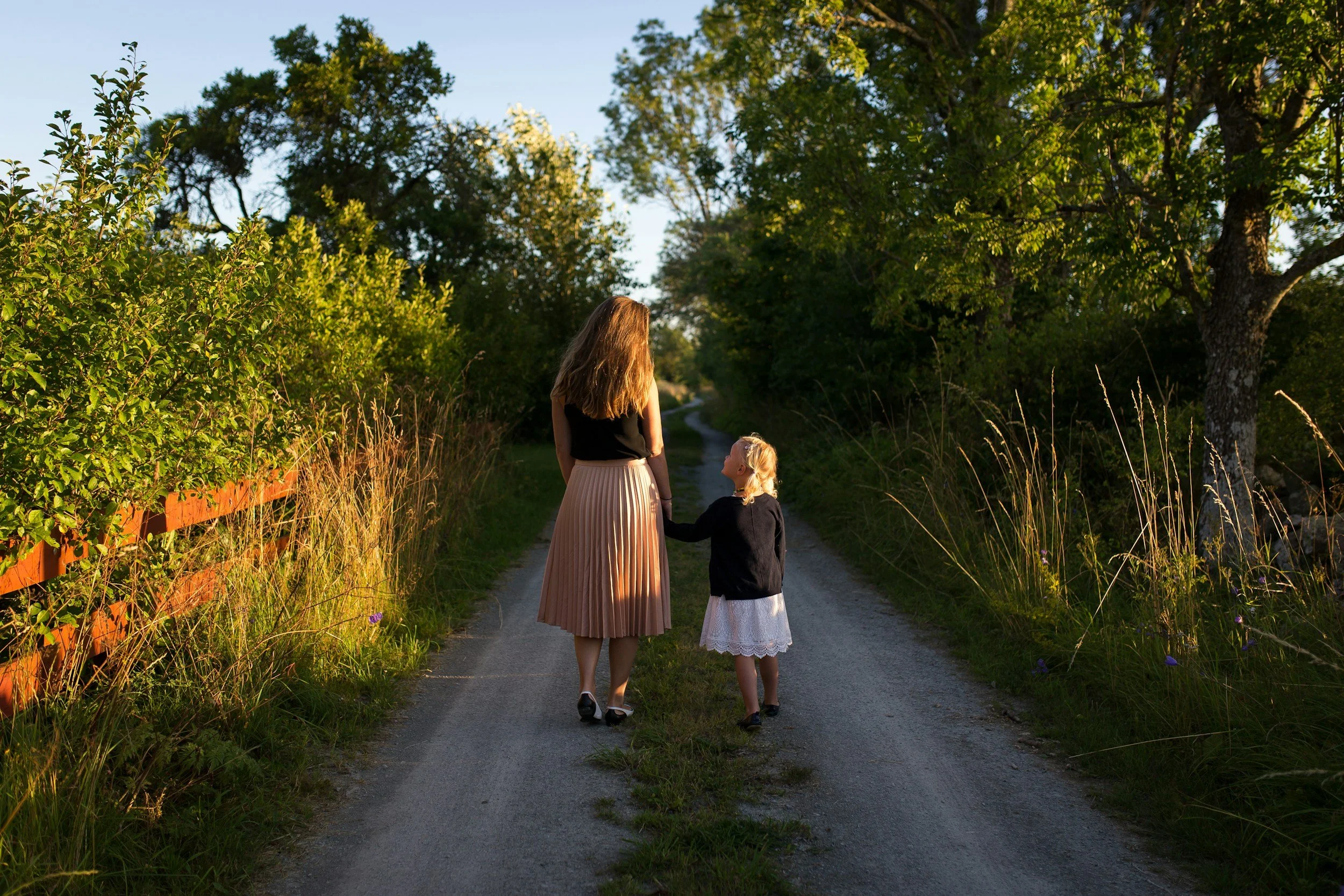
Those with secure attachment styles most likely grew up with primary caregivers who responded quickly and appropriately to their needs
Everybody wants "secure" attachment, I get it. I want to first and foremost reiterate that none of the attachment styles are bad, but can be indicators of what a person needed and didn't get (or got too much of) during their upbringing. Secure attachment is where most people are wanting to land. I also think it is important to say that people have traits of secure attachment in their relationships even if they typically fall within another category.
Those with secure attachment styles most likely grew up with primary caregivers who responded quickly and appropriately to their needs (both emotional and physical). These caregivers could be relied upon most of the time. The securely attached child often seeks out comfort and safety from their primary caregivers. According to research from the American Psychological Association, secure attachment in childhood creates a foundation for emotional regulation and healthy relationships throughout life.
A securely attached adult is comfortable with intimacy, is emotionally available to others, is resilient to stress, and has a relatively stable sense of self. Keep in mind that when I say this, I mean most of the time. These adults, if parents, usually model this with their children as well.
Trauma note: Just because a person had childhood trauma does not necessarily mean that they didn't have a secure attachment with their caregivers.
Anxious Attachment Style: Signs, Causes, and Trauma Connections
An anxiously attached person often feels threatened that if they aren't doing things just right, they are at risk of being abandoned. They also might feel like others are mad at them, indifferent about them, or disgusted with them without having actual evidence to prove that. This anxious preoccupied attachment style is closely linked to childhood experiences of inconsistent caregiving and emotional neglect.
Oftentimes the anxiously attached person had caregivers that were inconsistent. Sometimes their needs were met and sometimes they weren't. This means that the child becomes confused due to the mixed signals they're getting, and don't quite know how to act in order to maintain a strong relationship.
In adult relationships, this can look like people pleasing in order to keep somebody close, or feeling "needy" and constantly seeking reassurance. In their desire for closeness, they can actually push others away. Many of my clients with anxious attachment also experience people-pleasing as a trauma response, which is something we work through in therapy sessions.
Avoidant Attachment Style: How Independence Becomes a Defense Mechanism
Those with an avoidant attachment style are hyper independent and internalize a lot of their feelings. This is often due to a person not receiving the care they needed from their caregivers, who were often not present either physically or emotionally. This could also mean that their caregivers didn't invite emotional intimacy or punished the child for sharing their emotions. This attachment style can also be created by caregivers who are overly strict, regimented, and less attuned emotionally.
In adult relationships, an avoidantly attached person would most likely hyper-fixate on a person's flaws in order to push them away, or feel completely shut down to the other person. They might run away from confrontation because they don't know how to express their feelings and instead shove them down. They might feel like they are constantly looking for an "out" or a way to not commit to things. They are the lone wolves. This dismissive avoidant attachment pattern often shows up in trauma patterns in relationships, making it difficult to create lasting emotional bonds.
Disorganized Attachment: When Fear Becomes the Core of Connection
This style is a bit tricky because it is almost a combination of the avoidant and anxious attachment styles. Disorganized attachment is characterized by fear which is oftentimes caused by volatility and unpredictability with the individual's caregivers. The child in this case has no idea what is going to happen next with their caregivers, or even if they can be relied on at all. According to the National Child Traumatic Stress Network, disorganized attachment is most strongly associated with trauma, abuse, or frightening caregiver behavior.
This person might feel confusing to be in a relationship with, because they both crave closeness and also want to push the other person away. This is because while everybody needs love and so does the disorganized attached person, they also have core experiences where the person or people who were supposed to love and protect them also hurt them. This can feel out of control for the person who has this attachment style and also for the people who love them. Understanding your fight, flight, and freeze responses can help you recognize these patterns. Learn more about understanding trauma responses here.
How Childhood Trauma Shapes Adult Attachment Styles

A person’s attachment style, impacted by their childhood trauma, is just another name for a coping strategy that has formed over time in order to keep themselves safe in relationships.
After reading about the different attachment styles, it is easy to understand how early childhood trauma would impact one's ability to develop. People who grow up in homes where their caregivers aren't always attuned to their needs might have gaps in their ability to connect with others in healthy ways. The Adverse Childhood Experiences (ACE) study demonstrates the profound impact that childhood trauma has on attachment, mental health, and physical health outcomes throughout the lifespan.
In my practice, not pathologizing the person is so important to me. Part of what I help my clients to understand is that their attachment style is just another name for a coping strategy that has formed over time in order to keep themselves safe in relationships. This trauma-informed perspective is central to our approach at Embodied Healing KC, where we focus on compassion and nervous system healing rather than labeling or judgment.
The Science Behind Attachment and Trauma Healing
Thanks to a something called neuroplasticity, our attachment styles are not fixed. They can move towards secure attachment through therapy and corrective experiences in new adult relationships. The more experiences of safety that we have, the more we are able to feel comfortable and secure with others. Healing work matters!
Studies from Harvard's Center on the Developing Child show that the brain remains capable of forming new neural pathways throughout life. This means that with the right therapeutic support, you can rewire patterns that were established in childhood.
Healing Attachment Wounds Through Somatic Therapy in Kansas City
At Embodied Healing KC, we understand that attachment wounds are stored not just in your mind, but in your body. Traditional talk therapy might not be enough to address these deeply ingrained patterns. That's why we use body-based approaches like Somatic Experiencing® to help you heal attachment trauma at the nervous system level.
Through somatic therapy in Kansas City, we work with your body's innate wisdom to create new experiences of safety and secure attachment. We also offer EMDR therapy, which can be particularly effective for processing attachment trauma and building healthier relationship patterns.
What to Expect in Attachment-Focused Trauma Therapy
When you work with us on attachment issues, we create a safe, attuned therapeutic relationship that can serve as a corrective emotional experience. This means that the therapist-client relationship itself becomes healing. We help you:
Recognize your attachment patterns and how they show up in relationships
Understand the traumatic experiences that shaped these patterns
Develop body awareness and regulation skills through somatic techniques
Practice new ways of relating in the safety of the therapeutic relationship
Build earned secure attachment through corrective experiences</span>
If you're ready to begin healing your attachment wounds and building healthier relationships, schedule a complimentary consultation with our team of trauma-informed therapists. You don't have to navigate this journey alone.
Start Your Trauma Healing Journey With Somatic Therapy
At Embodied Healing KC, our trauma-informed therapists guide you with compassion and skill, helping you safely process emotions and build resilience. If you are ready to start healing from trauma and would like some support, reach out! Trauma-informed therapist Lauren Bradley has immediate openings and is ready to help you on your journey.
Frequently Asked Questions About Attachment Styles and Trauma
-
Yes, attachment styles can absolutely change in adulthood through therapy, corrective relationship experiences, and intentional healing work. Research shows that earned secure attachment is possible regardless of your childhood experiences. Somatic therapy, EMDR, and other trauma-focused approaches can help rewire attachment patterns by creating new neural pathways and experiences of safety.
-
While attachment styles vary among trauma survivors, anxious and disorganized attachment styles are particularly common in people who experienced childhood trauma. Disorganized attachment is most strongly associated with abuse, neglect, or frightening caregiver behavior. However, it's important to remember that with proper support, these patterns can shift toward secure attachment.
-
Attachment trauma can create patterns in romantic relationships such as fear of abandonment, difficulty with intimacy, people-pleasing behaviors, emotional distance, or push-pull dynamics. These patterns developed as protective strategies in childhood but often create challenges in adult relationships. Therapy can help you understand these patterns and develop healthier ways of connecting with partners.
-
Attachment styles describe patterns of relating to others based on early caregiving experiences, while trauma responses (fight, flight, freeze, fawn) are immediate nervous system reactions to perceived threats. However, they're closely connected. Your attachment style often influences which trauma responses you're most likely to use. Both can be addressed through trauma-informed therapy approaches.
-
The timeline for healing attachment wounds varies for each person depending on the severity of trauma, current support systems, and consistency of therapy. Some people notice shifts within a few months, while deeper attachment healing may take a year or more. The key is that healing is possible, and progress happens in layers. Somatic therapy can often accelerate this process by working directly with the nervous system.
-
Yes, many people exhibit different attachment styles in different relationships or contexts. You might have secure attachment with friends but anxious attachment in romantic relationships, or vice versa. Some people also have a dominant attachment style with traits from other styles. This is completely normal, and therapy can help you understand these variations and work toward more secure attachment across all your relationships.

Stevie Olson-Spiegel is a Licensed Therapist and Somatic Experiencing Practitioner located in Kansas City. She uses Somatic Experiencing as her main body-based trauma healing modality, as well as EMDR. As an Intuitive Eating Counselor, she uses these principles to help her clients challenge their relationship with their cultural misconceptions about their body and food.




What self-compassion really is, gentle vs. fierce self-compassion, why it can feel so hard, and 3 simple practices from a Kansas City therapist.