
What Is Co-Regulation? A Somatic Therapist’s Guide for Couples Therapy and Connection

When you are in trauma therapy, the importance of noticing progress and healing is essential.
“Being in a committed relationship is hard work.”
I’m sure many of us have heard this before. A committed relationship requires two people to come together as one. One unit, one partnership, one team. What if that work didn’t have to feel like work? What if, becoming one unit didn’t feel like losing oneself, but instead, feeling the most understood, most connected you’ve ever felt? Feeling not just connected and understood by another, but also with yourself.
I think what fascinates me most about a healthy loving connection is witnessing how in tune it feels not just for the couple but for those around. It’s something that’s easy to recognize and it pulls you in, making you want to know what that intimacy must feel like.
As magical as it can look, that secret ingredient is beautifully birthed through co-regulation. The act of a calm nervous system speaking to- and guiding- another into a state of equilibrium. This synchronization is where somatic therapy and nervous system regulation can really bring couples together. Afterall, what’s more intimate than being seen and supported?
If you’re looking for couples therapy in Kansas City, co-regulation is one of the most powerful “felt” skills to practice because connection isn’t just an idea, it’s an experience in the body.
What Is Co-Regulation?
Put simply: co-regulation is when two nervous systems influence each other. Your partner’s calm can help your body settle, and your calm can help theirs.
Many might assume that a regulated nervous system means the absence of discomfort. Forever gone are the days of anxiety, depression, trauma and everything else that keeps us stuck. As good as this sounds, this isn’t the reality in which we live. Our bodies need our protective responses to help keep us safe, however; our fight, flight, freeze, and fawn responses can keep us stuck at times and we need help finding our way out.
Imagine your partner noticing the changes within your nervous system and gently guiding you out of that intense feeling. Hold that image and notice how it makes you feel. This is the beauty of co-regulation. Co-regulation is another way to assure your partner that you see and understand them. That you respect and have an interest in their inner world. It makes room to recognize how personal experiences are not isolating but instead can bring people together.
For a deeper foundation, you can explore the science of coregulation here.
Why Co-Regulation Matters for Trauma, Attachment, and Intimacy
The concept of co-regulation is often acknowledged as something we experience in early life, initially established in relationship with an individual’s caregiver. As children experiencing any emotion can feel greatly overwhelming as it often feels too big to manage. This is where co-regulation through a caregiver teaches us how to manage and cope with our emotional experiences.
Understanding how foundational co-regulation is highlights the impact of this interpersonal skill. This idea that early onset co-regulation establishes one’s ability to build capacity for self-sufficiency shows us how powerful one nervous system is to another. Co-regulating with a romantic partner can give your partner a chance to greater self-sufficiency in the long run.
Co-regulation also supports your “window of tolerance”, the zone where you can stay present, communicate clearly, and feel emotionally safe in your relationship. (If you want a helpful overview of nervous system regulation, here’s a related read: Regulating Your Nervous System: What It Means and How to Do It.)
4 Somatic Ways to Practice Co-Regulation With Your Partner

There are many ways to co-regulate with your partner including reading body language and attending couple’s therapy.
1) Read Body Language (Somatic Awareness + Attachment Cues)
Part of co-regulation is picking up on the subtle messages your partner is giving you even when there is a lack of words. Body language is one of the oldest, most universal languages to ever exist.
To build awareness of one’s body language start by spending time with one another. I know it sounds super obvious and cliché but truthfully, the more time you spend with your partner these shifts in their mood, energy, and physiology will become apparent.
Have fun with one another, notice how free their movements are when they’re relaxed. When a heated discussion is taking place how do you visibly notice their body tense up? Invite them to speak freely with you and be a container for them. Cultivate a safe space where you can both feel at ease sharing without inhibition.
By bringing awareness to their body language you will learn so much information regarding their inner world. What emotions can you tell they’re carrying? Think about how you can support your partner’s needs based on the information provided.
2) Invite Balance (Down-Regulate or Up-Regulate Together)
Studies show that co-regulation is bidirectional meaning it doesn’t just apply to interrupting negative emotions in favor of more positive feelings but it also applies to “downregulating” our more comfortable, positive emotions as well. Either way we want movement.
If your partner is experiencing heightened emotions that cause them to spiral or feel disconnected with themselves try pointing out something outside of their perspective. If all they can see is doom and gloom, try to point out something that can help them maintain a positive or neutral outlook as well. This isn’t an attempt at invalidating their emotions. We don’t want to say things like “but it’s not that bad.” or “you’re overreacting everything will be fine!”. Instead be curious with them about their experience and invite them to consider what might actually work well for them within that situation.
In a physical sense, if they’re struggling with physiological effects, invite them to notice their environment. Help redirect their focus and help them immerse in their surroundings by using their 5 senses. Orienting, or grounding, has been proven to reduce the physical manifestation of anxious feelings.
Downregulating can be tricky and primarily becomes important when your partner is too fearful of discomfort. To encourage your partner to build tolerance for their uncomfortable emotions you can acknowledge the resiliency they already have, remind them of the things they’ve managed to overcome.
If you want a deeper understanding of dysregulation (and why “calm” isn’t the goal all the time), this post may help: Understanding Nervous System Regulation: Why Somatic Therapy Works.
3) Practice Tracking Together (Somatic Tracking + Interoception)
As a therapist who operates from a somatic experiencing lens part of my job is to help clients notice within themselves what is happening. This act is called tracking in which I ask a client to pay close attention to how their body is responding to their emotional/ mental state.
Tracking is an important tool in co-regulation as this helps you connect body language to an inward experience. Co-regulation is designed to ultimately help someone learn to regulate within themselves which starts with tracking- making this effective in many ways.
One fun exercise you can do with your partner to help you both practice tracking is Eye Gazing. Take some time to sit criss-cross across from each other, closely and stare into each other’s eyes.
As you sit there ask your partner what they notice within themselves. How does eye gazing feel? check-in with yourself and with your partner. Take stock and notice of what you’re carrying to help you better discern what your partner is feeling.
4) Explore Somatic Couples Therapy (Support for Co-Regulation Skills)
Explore couple’s therapy in Kansas City with a clinician who understands the benefits and impact of nervous system regulation. Aside from the typical couples therapy techniques, this allows you and your partner to feel the understanding between one another.
Somatic work really allows clients to slow down and be present with their environment and the people around them. Connection isn’t something that’s over-intellectualized. It’s not about how well it can present itself, it’s something that is felt.
My role is to help bring couples together through promoting trust, empathy, mutual understanding, and a collaborative mindset that strengthens relationships. As the clinician in the room I guide couples through recognizing more than just the content of the situation but bring into perspective just how their body is activated. Since I’m not personally in the relationship I’m able to be more objective and see things that partners might miss. I help track progress and help couples identify realistic, tangible tools for their relationship.
Start Your Couple’s Therapy Journey With Somatic Therapy
At Embodied Healing KC, our trauma-informed therapists guide you with compassion and skill, helping you safely process emotions and build resilience. If you are ready to start couple’s therapy and would like some support, reach out! Trauma-informed therapist Lauren Bradley has immediate openings and is ready to help you on your journey.
Frequently Asked Questions About Co-Regulation and Couple’s Therapy
-
Co-regulation in a relationship is the nervous-system process where one person’s calm presence, tone, and attunement helps the other person settle, feel safe, and return to balance—especially during conflict or stress.
-
Co-regulation is a healthy, mutual skill that supports connection while each person maintains autonomy. Codependency often involves losing boundaries, over-responsibility, or relying on someone else to manage emotions without reciprocity or self-agency.
-
Yes. Co-regulation can reduce escalation by slowing the nervous system response (fight/flight/freeze), widening your window of tolerance, and making it easier to communicate and repair.
-
Common signs include shutting down, feeling numb, getting reactive quickly, racing thoughts, tight chest, clenched jaw, or feeling “out of your body.” These are protective responses—not character flaws.
-
Try orienting to the room together (5 senses), slowing your exhale, sitting back-to-back and noticing breath, or naming one neutral observation before discussing the issue. Use consent and pause if either person feels flooded.
-
If the same conflict repeats, repair feels hard, or one/both partners struggle to stay present during stress, couples therapy can help you build co-regulation tools, communication skills, and safety in the relationship.

Stevie Olson-Spiegel is a Licensed Therapist and Somatic Experiencing Practitioner located in Kansas City. She uses Somatic Experiencing as her main body-based trauma healing modality, as well as EMDR. As an Intuitive Eating Counselor, she uses these principles to help her clients challenge their relationship with their cultural misconceptions about their body and food.
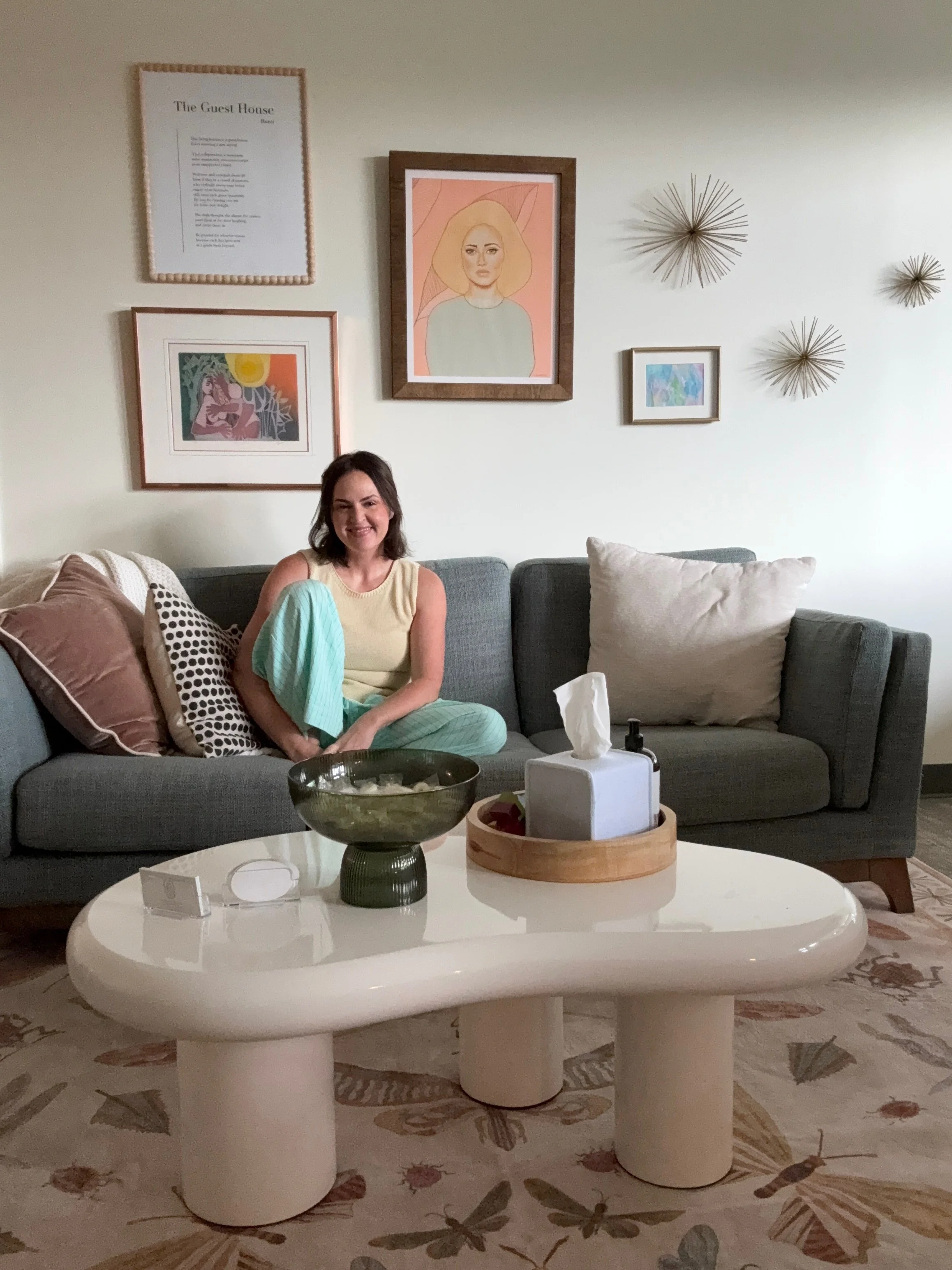



Wondering what a somatic therapy session is really like? A Kansas City somatic therapist explains what actually happens — no exorcisms, just real healing.